
GPIO & Modules
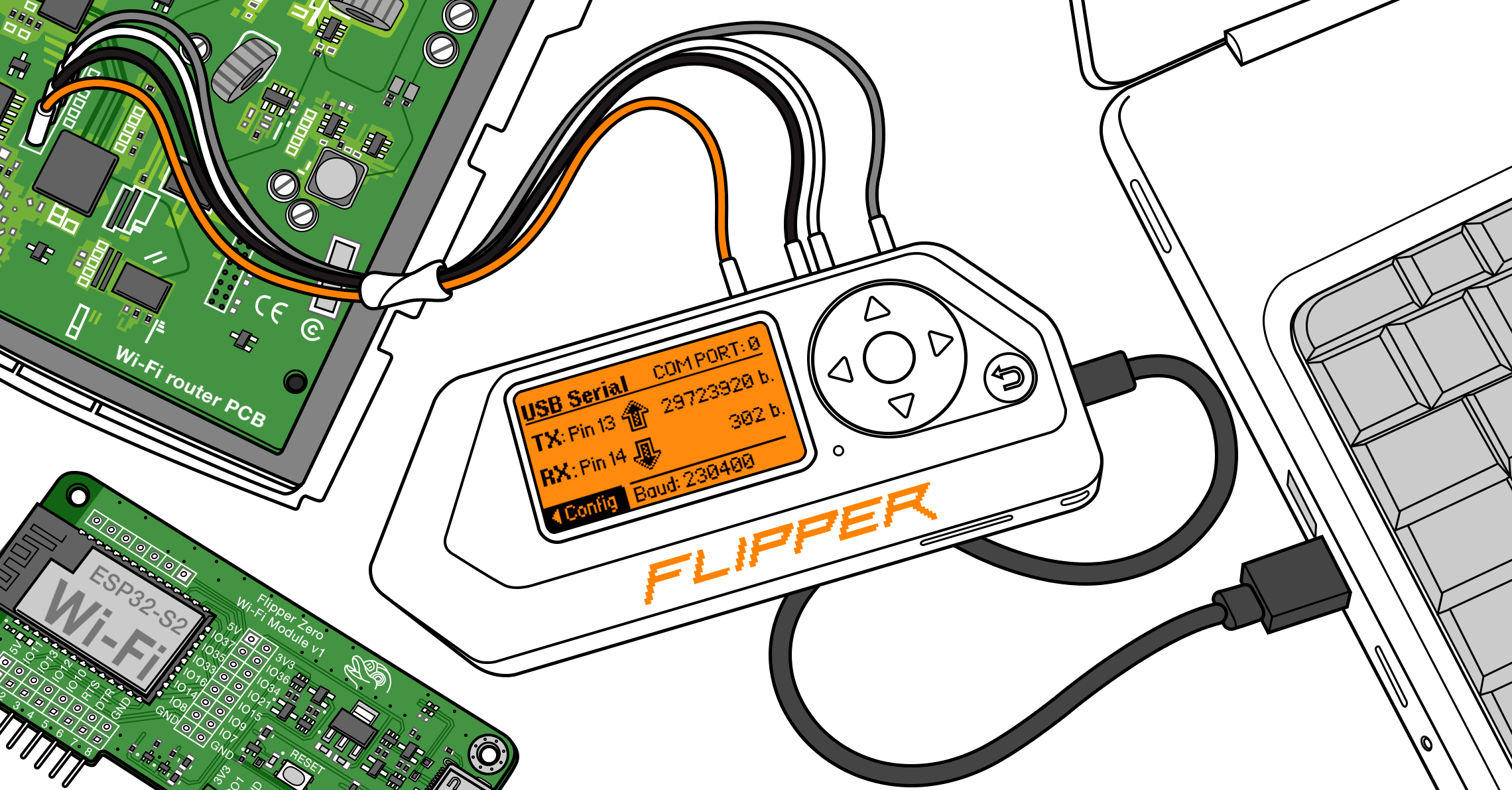
The 18-pin header on top of the Flipper Zero turns it into a hardware tool: it can power and talk to external modules, act as a USB-UART adapter, flip pins by hand for testing, and serve as a target for a hardware debugger.
Basics
| Page | What's inside |
|---|---|
| GPIO pinout | All 18 pins, voltages, current limits, 5 V on pin 1, 3.3 V / 5 V tolerance |
| GPIO app | Main Menu → GPIO: USB-UART Bridge, GPIO Manual Control, 5V on GPIO; CLI gpio and i2c |
| External modules | Overview of module types and which pins each one uses |
| Expansion modules | Settings → Expansion Modules and the Expansion Module Protocol |
| Modules and their apps | Every module the app packs support, and what each app does |
Modules
| Page | Module |
|---|---|
| External CC1101 | Sub-GHz radio with a stronger front end (covered in the Sub-GHz section) |
| ESP32 / Wi-Fi | Wi-Fi Devboard, ESP32 Marauder, the Unleashed web flasher and wardriving map |
| NRF24 | 2.4 GHz nRF24L01 sniffer and MouseJack |
| SIM800 | GSM module: calls, SMS, phonebook, USSD (built-in Unleashed app) |
| GPS | Location from the companion phone (GPS service) and NMEA GPS modules on UART |
| Video Game Module | RP2040 module with video out and a motion sensor |
Wi-Fi Developer Board
| Page | What's inside |
|---|---|
| Devboard: getting started | Preparing the Flipper, plugging in, USB and Wi-Fi connection |
| Devboard: debugging and logs | Black Magic / DAPLink, VS Code debugging, reading UART logs |
| Devboard: firmware update | Flashing the board's own firmware with uFBT |
Unleashed
Unleashed ships extra GPIO tooling out of the box: the SIM800 app (Apps → GPIO → SIM800), external CC1101 support with amplifier control in Sub-GHz, external IR module output in Infrared → GPIO Settings, and a large set of GPIO plugins in the extra app packs. See External modules.
Before plugging anything in
Power the Flipper off before connecting a module, and push the module all the way into the header. Hot-plugging a module with a large capacitive load can corrupt the microSD card, because the card and pin 9 share the same 3.3 V rail.